
| bio |
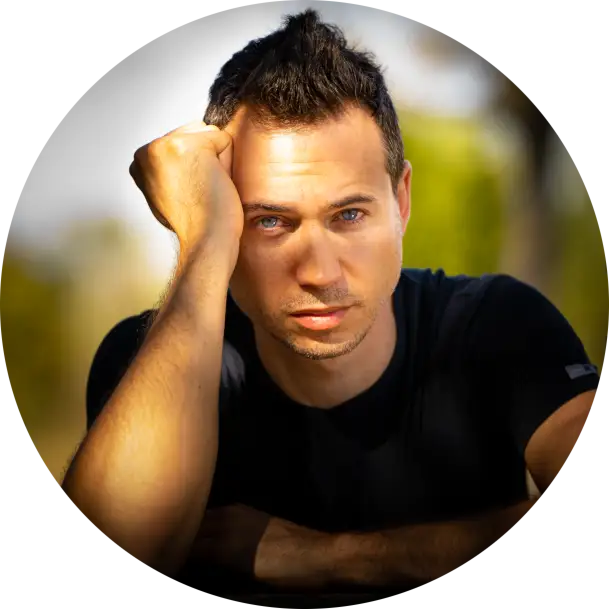
I was born in 1988 at Bologna (Italy). At 14 I started High School in Bologna in a experimental class on IT and Maths; in 2007 I got the diploma with grade 82/100. I started attending IT at University in Bologna; in 2010 I succesfully got the degree with grades 110/110 cum laude. My thesis was a review on how to implement Green Computing on Cloud Computing; the title of my thesis was "Green Cloud Computing: a comparative review". You can read its abstract and download it (in italian language) in the academics section.
Now I'm attending a postgraduate course in IT at University of Bologna. I plan to get my postgraduate degree in 2012.
I currently have a partnership with Microsoft as being a Microsoft Student Partner for the University of Bologna. As MSP I organize several talks on the University of Bologna and University of Cesena.
I have some work experience as I did several jobs on the ICT sector: I worked as System Administrator, Web Designer, Developer on PL/SQL.
I am good in working in team as I worked on several IT projects during my graduate course: I worked with Scheme, Assembly, Java, C, PHP, JavaScript, XML, XMLSchema, CSS, HTML, PL/SQL.
In my free time I love doing trekking and climbing.
If you want to contact me plase see the contacts section.

| academics |
| Title | Cloud Computing |
| Date | 26th of May 2011 |
| Place | University of Bologna |
| Video | You can watch the video here (italian language) |
| Title | Green Cloud Computing |
| Date | 29th of October 2010 |
| Place | University of Bologna |
| Video | You can watch the video here (italian language) |
| Slides | Slides can be downloaded here. The slides come with licence Creative Commons BY+NC+SA (Legal Code). |
| Journal | Linux Gazette |
| Date | February 2008 |
| Abstract | Today Internet is an essential tool for everyday life and its growth is more an more rapid. At the same time, new Web-based applications and kinds of technology keep growing and the paradigm of Cloud Computing gives a valid answer to their needs. Cloud Computing is Internet-based computing, whereby shared resources, software, and information are provided to computers and other devices on demand. A particularly relevant aspect of this paradigm is the environmental impact, that lists among its problems the growing energy request. This thesis focuses on this peculiar Cloud Computing matter which is in the midst of the ecological and economic sphere. The goal of my thesis is to study solutions that make Cloud Computing facilities more energetically efficient. In order to achieve this aim, I analyzed the consumption of a Cloud facility and the architecture of a typical big datacenter, therefore I studied some policies and techniques to resolve the just considered energy problems. Since some big commercial companies (Amazon, Google, Microsoft) adopted several of the studied solutions I compared their energy feature choices. In this way, it was possible to me to draw up a classification of their Cloud Computing solutions on the basis of the environmental impact and costs, paying particular attention on the energy saving side. My review can turn out as an useful tool to make the point on Cloud Computing products' energy conditions. Furthermore my studies are particularly relevant in the point of view of a Green Cloud Computing and in the large of a more ecologically conscious IT. In the future the growing awareness of environmental IT impact will probably lead to a larger attention to this kind of problems. In particular, a possible future development of my thesis can be the finding of new solutions to reduce the greenhouse gas emissions and costs. |
| Download | http://amslaurea.cib.unibo.it/1181/ (italian language) |
| Prize | 1st Prize |
| Date | April 2007 |
| Description | I was the 1st Prize winner in year 2007 of the 4th edition of Il linguaggio della Ricerca ("The Research Language Competition"), held by the Italian Research Council. |
| Grade | 92/120 |
| Date | 17th of October, 2010 |
| Single grades | Reading: 28/30, Listening: 21/30, Speaking: 19/30, Writing: 24/30 |
| Partnership with | Microsoft |
| Period | July 2010, Present |
| School | Liceo Scientifico Enrico Fermi (Bologna, Italy) |
| Period | November 2006, May 2007 |
| Description | introduction of Linux |
| Major | Information Technology |
| University | Università di Bologna (Bologna, Italy) |
| Grade | 110/110 with Lode |
| Period | 2007, 2010 |
| Thesis | "Green Cloud Computing: a comparative review" |
| Class | Experimental class in Information Technology, Maths |
| School | Liceo Scientifico Enrico Fermi (Bologna, Italy) |
| Grade | 82/100 |
| Period | 2001, 2007 |
| School | Scuola Media V. Neri (Pianoro, Italy) |
| Grade | 10/10 |
| Period | 1998, 2001 |
| School | Scuola Elementare Silvio Mucini (Pianoro, Italy) |
| Grade | 10/10 |
| Period | 1993, 1998 |
| Description | Java Game. You have to shoot an airplane with a cannon. The more you shoot, the more points you earn. |
| Related course | Programming Methods with Laboratory |
| Programming language | Java |
| SourceForge url | https://sourceforge.net/projects/airbum/ |
| Description | The BohOS Operating System is an OS based on μMPS machine (http://mps.sourceforge.net/), divided into six layers. Each layer provides an abstraction layer to the i+1 layer. |
| Related course | Operating Systems |
| Programming language | C |
| SourceForge url | https://sourceforge.net/projects/bohos/ |
| Description | Simulate toll gates queues on Mathematica 7. |
| Related course | Computational Maths |
| Programming language | Mathematica |
| SourceForge url | https://sourceforge.net/projects/cararrivalsimul/ |
| Description | Project for develop and implement a tool to speed up the use of Design Patterns and UML Diagrams in Java. The project is about UMLClasses2Java: make automatic the process of generate a Class Diagram. The project uses eUML2. |
| Related course | Laboratory of Software Systems |
| Programming language | Java, eUML2 |
| SourceForge url | https://sourceforge.net/projects/francafa/ |
| Description | Database system for managing a flight company with a web-based client access. |
| Related course | Database with Laboratory |
| Programming language | PHP, SQL |
| Description | An Optical Inspector for geometrical pieces written in Assembly 8088. It gets a geometrical piece's points from an external reader and calculate perimeter, area and guess what piece it is getting information from an external database. | |
| Related course | Computer Architecture | |
| Programming language | ASM8088 | |
| SourceForge url | https://sourceforge.net/projects/optinsp8088/ |
| Description | Italian version of the game Hearts. The game use a central server for chat and authentication; the table is p2p among players. The game supports n-1 crashes of the playing peers. |
| Related course | Distributed Systems, Software Architectures |
| Programming language | Java RMI |
| SourceForge url | https://sourceforge.net/projects/p2p4peppa/ |
| Description | Phantoms is a student project for the University of Bologna, Academic Year 2010. The project is a realization of a Web environment for viewing and accessing a special services on documents based on books. This is the web demo of the project: http://ltw1011.web.cs.unibo.it:8080/client/ |
| Related course | Web-related Technologies |
| Programming language | Java, JavaScript, XSL (XSLT/XPath/XSL-FO) |
| SourceForge url | https://sourceforge.net/projects/techweb2010/ |
| Description | Extension of the CloudSIM project ( www.cloudbus.org/cloudsim/ ) to support interactive jobs and random jobs. Also a GUI was developed to make easier the interaction with the tool. |
| Related course | Simulation Systems |
| Programming language | Java |
| SourceForge url | https://sourceforge.net/projects/javasimcloud/ |
| Description | Load Balancer for VoIP applications. The systems has two network interfaces and choose the best one to send VoIP packages. |
| Related course | Computer Networks with Laboratory |
| Programming language | C |
| Lecturer | Prof. Giulia Spaletta |
| Contents | Introduction to the Mathematica environment. The kernel of Mathematica. The notebooks. Introduction in Mathematica programming. Graphical resources. Use of system capacity for the analysis and solution of a particular problem with a package develop. |
| Book | Mathematica graphics: techniques and applications, T. Wickham-Jones, Telos - Springer, 1994; Introduction to Programming with Mathematica, R.J.Gaylord, S.N.Kamin, P.R.Wellin, 2nd ed., Telos - Springer, 1996; Programming in Mathematica, 3rd ed., R. Maeder, Addison -Wesley, 1996. |
| Lecturer | Prof. Alessandro Amoroso, Prof. Vittorio Ghini |
| Contents | Models of distributed systems: synchronous asynchronous, time aware. Remote interprocess communication. P2P systems. Distributed transactions. Ubiquitous computing. Web services. Main issues of distributed systems: time and global states, communications, coordination and consensus, fault tolerance. Distributed systems architectures. Group project: to build a prototype of a distributed system by means of the Java programming language. |
| Book | G. S. Coulouris, J. Dollimore, T. Kindberg; Distributed Systems Concepts and Design (4th ed.); Addison-Wesley; 2005. |
| Lecturer | Prof. Massimo Campanino |
| Contents | Denumerable additivity. One-dimensional random walk. Generating function. Gamblers' ruin problem. Galton Watson processes. Markov chains. Recurrent and transient states. Stationary distributions. Markov chains with continuous time. Poisson process. Pure birth processes. Semi-Markov processes. Queueing processes. Queueing Markov processes.. Open and closed systems of queues. Jackson's property. |
| Book | S. Ross. Introduction to Probability Models. Academic Press; W. Feller. An Introduction to Probability Theory and its Applications. I Volume. Wiley. |
| Lecturer | Prof. Cosimo Laneve |
| Contents | Introduction: program analysis techniques. Hoare logic. Abstract interpretation: abstract domains, interval analysis, constant propagation. Data-flow analysis. Advanced techniques for software verify. |
| Book | Libro |
| Lecturer | Prof. Lorenzo Donatiello, Prof. Gabriele D'Angelo |
| Contents | Classification of systems and models; Design of simulation experiments; Design and implementation of simulators; Random number generation and random variate generation; Techniques for discrete event simulation; Input and output data analysis; Verification, validation and testing of simulation model; Simulation tools; Parallel and distributed simulation; Design and implementation of simulation models for wireless sistems; |
| Book | Libro |
| Lecturer | Prof. Paolo Ciancarini, Prof. Davide Rossi |
| Contents | Introduction to the software architectures. Architectural styles. System and architectures examples. Use of UML to define architectures. Developing process for architectures. Software product lines. Advanced architectural styles. |
| Book | Taylor, Software Architecture: Foundations, Theory and Practice, Wiley 2009. |
| Lecturer | Prof. Luciano Bononi |
| Contents | # Introduction to wireless systems. Physical layer: - Fundamentals of wireless mediums, propagation, coding and channel techniques - monitoring and measurement metrics and techniques - mobility at the physical layer. System deployment, analysis and solutions for propagation problems. Data Link Layer. - Multiple Access Techniques and logical channels - logical channels and wireless duplexing, TDMA, FDMA, CDMA, Wideband CDMA - broadcast and point to point access policies, mobility at the MAC layer, time and space domain problems and solutions, multi-hop communication and channel capacity, techniques for efficient and reliable wireless communication. Network Layer: - mobile networks - addressing and device mobility - dynamic Routing and IP-based solutions. Transport Layer: - the wireless impact, reliable communication and TCP-based solutions. #System issues. Wireless Network Architectures and Management issues: - WLAN, Infrastructure and Hot-Spot Networks - Sensor Networks - Mobile Ad Hoc Networks, Vehicular Ad Hoc Networks - Wireless Mesh Networks - cellular systems and networks' architectures and techniques --- 1G, 2G (GSM), 2.5 G (GPRS, EDGE), 3G (UMTS), 4G and beyond - Satellite systems. #Service issues: - Location-based services - Quality of Service vs. Best Effort services - Client/Server vs. other service paradigms (Agents, middleware solutions, etc.). #Main Standards and consumer technologies: - IEEE 802.11 (Wi-Fi) - IEEE 802.16 (WiMAX) - IEEE 802.20 (Mobile Broadbad Wireless Access) - IEEE 802.15.1 (Bluetooth) - IEEE 802.15.4 (ZigBee). #Advanced topics: - Fundamentals of Wireless Systems' Security - Wireless Internet (Internet, cellular and wireless networks' convergence) - Pervasive Communication systems - Wireless Community Networks - Current and visionary fields of applications and new services. |
| Book | Wireless Communications: Principles and Practice (2nd Edition) -- by Theodore S. Rappaport. |
| Lecturer | Prof. Ugo Dallago |
| Contents | Organisation of computer systems. Binary systems. Elements of Boolean algebra, Logic Gates, Combinational circuits, Sequential circuits. Memory, CPU and Bus. BIOS and boot. The operating systems. The ISA level. Assembly programming. ANSI C language. Mapping on the assembly. Static and dynamic linking. Dynamically loaded libreries. The microarchitecture level. |
| Book | Andrew S. Tanenbaum. Architettura dei Calcolatori, un Approccio Strutturato. Pearson Prentice Hall, quinta edizione, 2006 |
| Lecturer | Prof. Fabio Panzieri, Prof. Vittorio Ghini |
| Contents | Foundations: requirements, network architectures (levels of abstraction, OSI RM, Internet, performance metrics, communication protocols) Point-to-point networks: network hardware, coding, byte-oriented protocols, bit-oriented protocols, errors, reliable transmission, CSMA/CD, Token ring, Wireless communications (802.11). Packet Switching Networks: Datagram, Virtual Circuits, Switching and Forwarding, extended LAN, ATM Internetworking: Bridge, Switch, Router, ARP, IP, DHCP, ICMP protocols, routing, global Internet (subnetting, interdomain routing (BGP), IPV6, IP Multicast). End-to-end protocols: UDP, TCP, RPC. Network services: DNS, Mail, WWW |
| Book | L. Peterson and B. Davie, Computer Networks: A Systems Approach, Morgan Kaufmann |
| Lecturer | Prof. Ozlap Babaoglu |
| Contents | Trustworthiness in network information systems; Economic and technological impediments to trustworthiness; Vulnerabilities, Threats, Attacks; Cryptography: Private-key cryptography, public-key cryptography, DES and RSA protocols; Key management, Kerberos; Key escrow, secret sharing; Authentication: passwords, trusted paths, smartcards, biometrics; Access control mechanisms: Access control lists, capabilities; Application-dependent security policies and authentication; Availability and denial of service; Exostructures: Firewalls, Virtual Provate Networks; IPSec; Intrusion detection systems, virus detection. |
| Book | Matt Bishop, "Introduction to Computer Security", Addison-Wesley, 2005 |
| Lecturer | Prof. Alan Bertossi |
| Contents | Data structures. Arrays, records, lists, stacks, queues. Trees. Tree visits (preorder, inorder, postorder). Sets. Dictionaries. Binary search. Hash tables. Priority queues. Heaps. Heapsort. Balanced search trees. MFSET. Graphs. DFS and BFS. Design and analysis of algorithms. Computational complexity. Order of growth. Recurrence equations. Lower bounds. Design techniques: divide-&-conquer, backtrack, greedy, local search, dynamic programming. Sorting: Mergesort, Quicksort, Shellsort. Complexity. The P and NP classes. NP-completeness. Pseudo-polynomial, approximate, branch-&-bound, and probabilistic algorithms. Heuristics. |
| Lecturer | Prof. Danilo Montesi, Prof. Matteo Magnani |
| Contents | Databases, relation data model, relationa algebra and calculus, SQL, database design methology, ER data model and quality verification. Notions about the architecture of a DMBS. |
| Book | Paolo Atzeni, Stefano Ceri, Stefano Paraboschi, Riccardo Torlone, Basi di dati - Modelli e linguaggi di interrogazione 3/ed, 2009 |
| Lecturer | Prof. Calogero Tinaglia |
| Contents | Definition of natural numbers, division, divisibility, Euclide algorithm, 2 variable equations in Z, equality and equations in Z with remainder classes, algebra, structures (groups, rings, monoids, fields), matrix, vectorial spaces, Binet theorem, La Place theorem, linear systems, Cramer, variety, Rango theorem. |
| Lecturer | Prof. Cesare Parenti |
| Contents | The number systems: N,Z,Q,R. The induction principle. Sequences and series of real numbers. Differential calculus for functions of one real variable. Exponential and logarithm function. Trigonometric funtion. Limits. Continuity (local and global properties). Derivatives, monotony, convexity. Local maxima and local minima. Infinite and infinitesimal asymptotics. Taylor's formula. Integral calculus for function of one real variable: primitive and integral, techniques of integration (by parts, by substitution), integral of rational functions. Generalized integrals. An introduction to differential calculus for function of many variables. Continuity and derivatives for function of due real variables. Integral calculus for function of two real variables. |
| Lecturer | Prof. Cesare Parenti |
| Contents | Propositional languages: syntax and semantics. Satisfiability and semantic equivalence. Syntactical methods: propositional resolution and natural deduction. Soundness and completeness. First order languages. Predicates, terms, quantifiers. Syntax: free and bound variables. Interpretations. Semantics for a predicative language. Satisfiability and semantic equivalence. Prenex normal form and Skolem algorithm. Mathematical induction. 4. Syntactical methods for first order. Natural deduction. Soundnes theorem. Completeness theorem. Compactness theorem. Propositional resolution; unification; first order resolution. |
| Lecturer | Prof. Giulio Casciola |
| Contents | Data rapresentation on a computer and floating point arithmetic. Experimental data approssimation and function approssimation. Polinomial interpolation and squaring formulas for estimate of function integrals. Zero function calculous and linear and non linear system resolutions. Numerical methods for solution of differential equations. |
| Book | A. Quarteroni, R.sacco, F. Saleri, Matematica Numerica, Springer (2008) |
| Lecturer | Prof. Renzo Davoli |
| Contents | Operating Systems: definition and history, Concurrent Programming, Structure of an O.S., Scheduling, Resource Management, Main Memory Management, Secondary Memory Management, File Systems, Security of Operating Systems, case study: Windows, case study: Linux, the C language, Programming Tools, Shell scripting |
| Book | Tanenbaum, Woodhill. Operating System Design and Implementation. Prentice Hall |
| Book | Silbershatz, Galvin, Gagne. Applied Operating System Concepts. Addison Wesley |
| Lecturer | Prof. Daniela Cavalcoli |
| Contents | Kinematics and Dynamics of a material point, Work and Energy, Particles systems, Shock Theory, Rotational Kinematics and Dynamics, Angulare Momentum, Gravitational Theory, Oscillations and Waves. |
| Book | Resnich, Halliday e Krane: Fisica Vol 1. CEA, Milano |
| Lecturer | Prof. Massimo Campanino |
| Contents | Random number and events. Operations between events and between random numbers. Estimate and probabilty. Subordinate estimate and probability. Independece and correlation. Inequality of Chebichev. Weak law of big numbers. Discrete distributions. Congiunt marginal discrete distributions. Ripartition function. Probability density. Continuus distributions. Multidimensional ripartition functions. Congiunt densities, marginal, subordinated. Elements of statistics. Markov chains. Poisson process. Queue system examples. |
| Book | F. Biagini, M. Campanino. Elementi di probabilità e statistica. Springer |
| Lecturer | Prof. Simone Martini, Prof. Riccardo Solmi |
| Contents | The evolution of programming languages. From assembly to higher level languages. Abstract machines, intepreters and compilers. Syntax (BNF) and semantics (SOS). Regular grammars, regular expressions, and regular automata: equivalences and principal theorems (e.g., pumping lemma); design of lexical analysers. Context free grammars and push-down automata: equivalences and principal theorems (e.g., pumping lemma). Deterministic context free grammars: algorithms for parsing; grammars LL(1), LR(0), SLR, LR(1), LALR. Environment, scoping rules and their implementation. Stack of the activation records; heap. Memory management: garbage collection. Sequence control, procedures, recursion. Types and type checking. Parameters and parameter passing: by value, by reference, by result, by name. Functional parameters; closures. Exceptions. The object-oriented paradigm: classes and objects, initialization, inheritance and late-binding. Subtyping is not inheritance. The logical paradigm: unification, resulution, operation semantics. The functional paradigm. |
| Lecturer | Prof. Roberto Gorrieri, Prof. Antonio Messina |
| Contents | Introduction to programming with functional language Scheme and object-oriented language Java. Functional programming with Scheme: numbers, operations, expressions. Definition of variable and function. Compositional functions and top-down develop. Relationship, predicats, conditional expressions. Induction principle and recoursive functions. Data structures: structures, lists and trees (binary, research, family, general). Local definition and scoping rules. Parametric data structures, polimorfism and high-order functions. Generative and structural induction. Graphs and backtrack algorithms. Accumulator functions. State variables and functions that modify the memory. Object-oriented programming in Java: classes, methods, abstraction, inheritance, mutable objects. |
| Lecturer | Prof. Fabio Vitali |
| Contents | Fundamentals: VII level protocols, MIME, character encodings, standard bodies. Basic web technologies: HTTP, URI, HTML, CSS, XML. Server-side technologies for web applications: perl, php, python, ruby. Client-side technologies for web applications: javascript, ajax, framwork ajax. |
| My Erdos number is 6. |

| jobs |
| Company | www.ripetizionicamilla.it |
| Period | November 2012 |
| Description | Photos, designed, developed and implemented the new website for this company. |
| Company | the-root.org |
| Period | October 2007, Present |
| Description | Created, developed and implemented the-root.org server with network services (www, mail, ftp, vpn, voip) |
| Company | La Dorica SRL (Cosmetics Industry) |
| Period | January 2008, December 2008 |
| Description | Set up a server (backup, mail, www) and a workstation; network connection from shops to the central office. |
| Company | PGS Bellaria SRL (Sports Industry) |
| Period | June 2008, September 2008 |
| Description | Designed, developed and implemented the new website for this company. |
| Company | Coconutstaff (Entertainment Industry) |
| Period | November 2006, June 2008 |
| Description | Worked as Public Relation Manager on the major clubs of Bologna (Capannina, Chalet delle Rose) |
| Company | Coconutstaff (Entertainment Industry) |
| Period | August 2007, September 2007 |
| Description | Designed, developed and implemented a new website for the company. |
| Company | Liceo Scientifico Enrico Fermi (Higher Education School) |
| Period | November 2006, May 2007 |
| Description | Introduced Linux O.S. to 25 students of Liceo Enrico Fermi (Bologna, Italy) in about 30 hours of lectures. |
| Company | Teorema(Information Technology and Services Industry) |
| Period | June 2005, September 2005 |
| Description | PL/SQL Programmer on Oracle DB using Report Oracle, Toad, SQL Navigator and Form Oracle. |
| Company | Ristorante lo Spaghetto (Restaurants Industry) |
| Period | June 2004, August 2004 |
Download my CV here.
Visit my Linkedin profile and feel free to add me to your network.